
“ChatGPT 5.6 Sol” has quickly become a popular topic among developers and AI professionals. Technically, however, ChatGPT is the name of OpenAI’s user-facing product, while GPT-5.6 Sol is the underlying model.
OpenAI first previewed the GPT-5.6 series on June 26, 2026, and officially introduced GPT-5.6 across ChatGPT, Codex, and the OpenAI API on July 9, 2026.
For developers, this upgrade is not simply about generating more accurate answers. It represents a broader shift from single-turn AI assistants toward agent-based systems that can plan tasks, use tools, process intermediate results, and complete complex workflows.
1. What Is GPT-5.6 Sol?
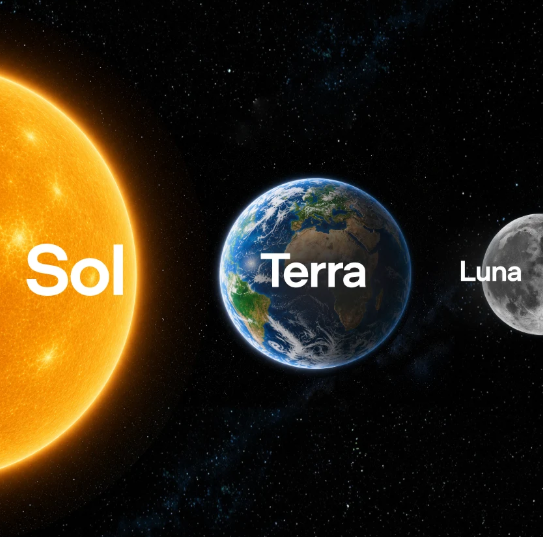
The GPT-5.6 series currently includes three main model tiers:
- Sol: The flagship model for advanced reasoning, coding, research, and agentic workflows.
- Terra: A balanced model designed for general production workloads where performance and cost both matter.
- Luna: A faster and more affordable model for high-volume requests and lightweight tasks.
This structure highlights an important trend in AI application development: businesses no longer need to use the most powerful and expensive model for every request.
Instead, developers can select or automatically route tasks to different models based on complexity, response time, reliability, and budget.
2. What Has Improved in GPT-5.6 Sol?
The main advantage of GPT-5.6 Sol is not limited to better content generation. It is designed to handle longer, more complex, and multi-step tasks.
For coding workflows, the model can assist with task planning, code modification, terminal operations, tool coordination, and result validation.
For knowledge-based work, it can process documents, websites, enterprise data, and structured information to produce reports, presentations, spreadsheets, and other practical deliverables.
OpenAI has also introduced higher reasoning-effort options for GPT-5.6. In selected products, users can access modes such as max and ultra, allowing the model to spend more processing time on difficult tasks.
For API developers, programmable tool use is another important upgrade. GPT-5.6 can write and execute programs, coordinate multiple tools, and process intermediate outputs during a workflow.
OpenAI is also testing multi-agent capabilities in which several sub-agents work in parallel before the primary model combines their results into a final response.
3. Three Changes Many Developers May Overlook
3.1 The Most Powerful Model Is Not Always the Best Choice
GPT-5.6 Sol may be suitable for complex code reviews, scientific research, deep analysis, and multi-step agent workflows.
Terra can handle common production tasks such as content generation, document processing, and business automation. Luna may be a better choice for classification, data extraction, simple responses, and high-frequency requests.
An efficient AI application should not send every task to one fixed model. It should route each request to the most suitable option.
3.2 Token Efficiency Matters More Than the Listed Price
The official GPT-5.6 Sol API price is $5 per million input tokens and $30 per million output tokens.
Terra is priced at $2.50 per million input tokens and $15 per million output tokens, while Luna costs $1 per million input tokens and $6 per million output tokens.

However, developers should not compare models based only on token prices.
Task success rate, the number of tool calls, repeated generations, response length, and prompt-cache hit rates can all affect the actual cost of running an AI application.
A model with a lower listed price may ultimately cost more if it repeatedly fails to complete the task or requires several additional calls.
3.3 API Infrastructure Is Becoming More Important

As AI models become more capable, developers must pay greater attention to rate limits, failover, cost monitoring, model switching, and multi-provider management.
When an application depends entirely on one model or one provider, changes in pricing, service interruptions, or sudden increases in request volume can directly affect the entire product.
Unified APIs, smart routing, and automatic failover are therefore becoming essential production infrastructure rather than optional features.
4. How Should Developers Use GPT-5.6 Sol?
A practical approach is to divide business tasks into three complexity levels.
High-complexity tasks, including advanced code generation, long-document analysis, deep research, and autonomous agent workflows, can be tested with GPT-5.6 Sol.
Medium-complexity production tasks can be assigned to Terra, while simple and high-volume requests can be handled by Luna or other lower-cost models.
Before deploying GPT-5.6 Sol in production, developers should evaluate at least four indicators:
- Task success rate
- Average response time
- Cost per completed request
- Error and interruption rate
Testing should go beyond checking whether the model can produce an answer. Teams should also evaluate whether tool calls remain stable, whether long-running tasks are interrupted, and whether the final output can be used directly in the business workflow.
5. How JarvisClaw Reduces the Cost of Integrating New Models

JarvisClaw is an AI API Gateway and API Marketplace built for developers, AI startups, SaaS teams, and autonomous agents.
Through one OpenAI-compatible API, developers can access more than 80 AI models without building and maintaining separate integrations for every provider.
Smart Routing, automatic failover, and pay-per-call pricing allow teams to select models based on task complexity, cost, speed, and reliability.
JarvisClaw also supports x402-native agent payments, USDC and fiat top-ups, as well as Prediction Market APIs for AI agents, Web3 applications, automated data products, and tools involving Polymarket, Kalshi, sports data, and market signals.
GPT-5.6 Sol has been included in JarvisClaw’s priority model-integration roadmap. Its final availability, model name, and pricing will be published through the JarvisClaw Model List and official announcements.
For projects already using an OpenAI-compatible SDK, integrating a newly supported model generally does not require rebuilding the entire API architecture.
6. Conclusion
The value of GPT-5.6 Sol is not simply that it can provide more intelligent answers. Its greater significance lies in its ability to take on longer, more complex tasks that are closer to real production work.
For everyday users, this means stronger capabilities for research, coding, analysis, and content creation.
For developers, it means that model routing, tool orchestration, cost control, and API reliability will become increasingly important.
The most competitive AI products will not depend on one model alone. They will dynamically select the right model for each task while balancing intelligence, speed, stability, and cost.
FAQ
1. Are ChatGPT 5.6 Sol and GPT-5.6 Sol the same thing?
Not exactly. ChatGPT is OpenAI’s user-facing AI product, while GPT-5.6 Sol is a flagship model that can be used through ChatGPT, Codex, and the OpenAI API.
2. Is GPT-5.6 Sol available now?
OpenAI began introducing GPT-5.6 across ChatGPT, Codex, and the OpenAI API on July 9, 2026. Availability may vary depending on account type, subscription plan, region, and API access permissions.
3. How much does the GPT-5.6 Sol API cost?
The official price is $5 per million input tokens and $30 per million output tokens.
Terra costs $2.50 per million input tokens and $15 per million output tokens, while Luna costs $1 per million input tokens and $6 per million output tokens.
4. How should developers choose between Sol, Terra, and Luna?
Sol is designed for complex reasoning, coding, research, and agent workflows. Terra is suitable for general production workloads, while Luna is better for simple, high-frequency, and cost-sensitive tasks.
5. Does JarvisClaw support GPT-5.6 Sol?
GPT-5.6 Sol is included in JarvisClaw’s priority integration roadmap. Final availability, pricing, and the supported model identifier will be announced through the JarvisClaw Model List and official platform updates.